

The Most Common Winter Breakdowns in December — And How to Avoid Them

By Darrah’s Towing, Serving Cedar Rapids, Iowa City, Monticello & Eastern Iowa Since 1970
December in Iowa is a true test for both drivers and vehicles. Freezing temperatures, icy highways, unexpected snow, and heavy holiday travel combine to create some of the most dangerous driving conditions of the entire year. At Darrah’s Towing, we see firsthand the dramatic increase in winter vehicle breakdowns in Cedar Rapids, Iowa City, Monticello, and the surrounding communities the moment December arrives.
For more than five decades, our team has responded to thousands of calls across Eastern Iowa. We’ve pulled vehicles from snowbanks, helped stranded families, assisted commercial fleets during snowstorms, and responded to countless emergencies caused by mechanical failures triggered by the cold.
Our experience has taught us one important truth: most winter breakdowns are preventable with the right preparation.
In this comprehensive guide, built on real-world experience and industry expertise, we break down the most common December vehicle failures in Iowa—and how you can avoid needing an emergency tow this winter.
Why December Causes So Many Breakdowns in Eastern Iowa
The shift from fall to winter is harsher in Iowa than in many other states. December is especially unpredictable. It’s the month when the temperature starts to remain consistently below freezing, dew points drop, black ice forms rapidly, and older vehicles struggle to adjust to winter demands.
According to the Iowa Department of Transportation, winter-related vehicle failures and roadside incidents increase by more than 32% in December, making it one of the peak months for towing and roadside assistance calls.
Several factors contribute to this spike:
Drastic temperature swings
Increased strain on vehicle components
Early mornings and late evenings that reach dangerous subzero levels
Heavy holiday travel
More time spent driving in darkness
Increased ice and snow on major routes like I-380, Highway 151, Highway 13, I-80, and rural county roads
Because Iowa experiences both urban and rural driving conditions, drivers must prepare for city streets, major interstates, and unplowed gravel roads—each with its own challenges.
The Most Common Winter Breakdowns in December
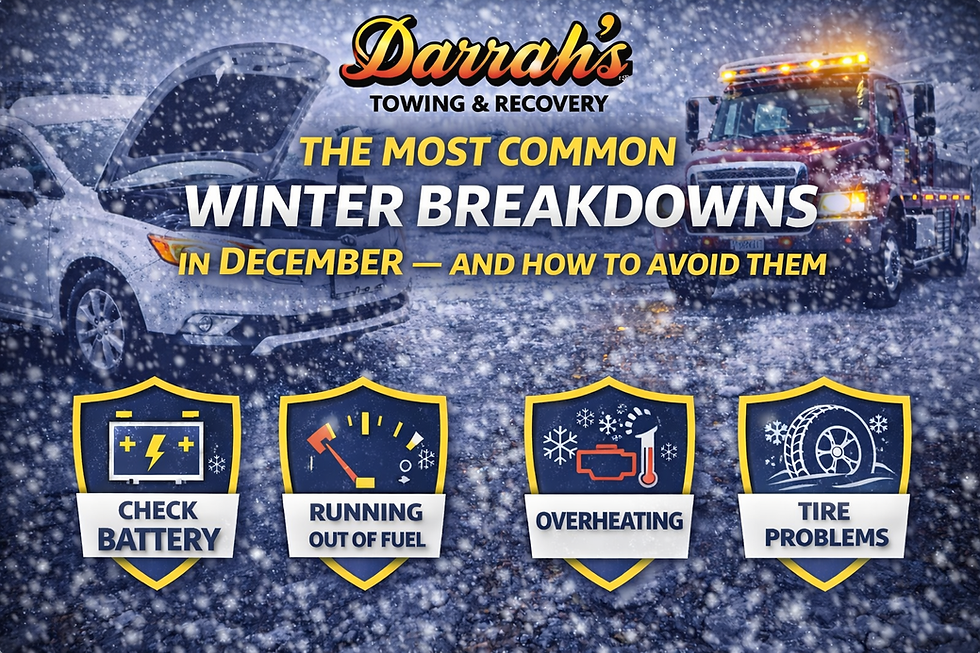
Below are the breakdowns our team responds to most often, especially during freezing temperatures and winter storms. Each section explains the problem, why it happens in cold weather, and how you can avoid needing a tow truck this season.
1. Dead Batteries
Dead batteries are the single most common cause of winter roadside emergencies in Cedar Rapids, Iowa City, and Monticello.
Why it happens:
Cold weather dramatically weakens a battery’s ability to hold a charge. At 0°F, a fully charged battery can lose up to 60% of its power. Older batteries are especially vulnerable, often failing overnight.
Warning signs:
Slow cranking
Clicking noises when starting
Dim headlights
Engine hesitation
How to avoid it:
Test your battery before winter
Replace batteries older than 3–4 years
Ensure terminals are clean and corrosion-free
Keep your vehicle in a garage when possible
Use a battery maintainer if your vehicle sits for long periods
2. Frozen Fuel Lines
Frozen fuel lines are common in rural and open areas surrounding Monticello, Anamosa, Palo, Tiffin, and Swisher—where winds lower the temperature even further.
Why it happens:
Condensation forms in the fuel tank. When temperatures drop, this moisture freezes and restricts fuel flow.
Warning signs:
Engine sputtering
Failure to start
Rough idling
How to avoid it:
Keep your fuel level at least half full
Avoid letting your tank run low
Use winter-grade additives if necessary
Park in sheltered areas when possible
3. Flat Tires and Tire Damage
Cold weather reduces tire pressure rapidly, weakens rubber, and increases the likelihood of blowouts. Add in road debris hidden under snow, and tire failure becomes extremely common in December.
Why it happens:
Air contracts in cold temperatures
Hidden potholes under snow cause impact damage
Ice reduces traction, causing uneven wear
Warning signs:
Frequent low tire pressure
Vibration at higher speeds
Visible cracks or bulges
How to avoid it:
Check tire pressure weekly
Maintain at manufacturer-recommended PSI
Inspect tread depth (minimum 4/32 inches for winter)
Consider winter tires for better traction
4. Brake System Failures
December’s icy conditions put extra stress on brake systems, especially in stop-and-go city driving in Cedar Rapids and Iowa City.
Why it happens:
Cold temperatures thicken brake fluid, reduce ABS responsiveness, and cause corrosion in older systems.
Warning signs:
Grinding noises
Soft or spongy brake pedal
ABS warning lights
How to avoid it:
Have brakes inspected before winter
Replace worn pads
Address any brake fluid leaks
Ensure ABS sensors are clean
5. Engine Overheating—Yes, Even in Winter
Many drivers believe overheating is only a summer problem. In reality, it is surprisingly common in winter when coolant is low or frozen.
Why it happens:
Old or weak coolant freezes
A stuck thermostat fails to regulate temperature
Radiator fans malfunction
Snow or slush blocks airflow
Warning signs:
Steam from under the hood
Temperature gauge rising
Sweet smell from coolant leaks
How to avoid it:
Check coolant levels regularly
Ensure coolant mixture is winter-safe
Replace thermostats showing signs of failure
Clean snow from the front grill
6. Locked or Frozen Doors and Windows
Freezing rain creates a layer of ice that can prevent doors from opening and windows from functioning.
Why it happens:
Rubber seals absorb moisture, which freezes and expands in the cold.
How to avoid it:
Apply silicone lubricant to door seals
Use a cover or shelter if possible
Avoid forcing frozen windows
7. Faulty Alternators
A failing alternator is one of the most stressful breakdowns because it often happens while driving—usually at night when headlights and heaters increase electrical load.
Why it happens:
Cold weather forces alternators to work harder, especially when batteries are weak.
Warning signs:
Dimming headlights
Electrical issues
Battery warning light
How to avoid it:
Have alternators tested in winter maintenance checks
Replace belts that show cracks or fraying
8. Starter Failures
Starters struggle more in winter because thickened engine oil creates added resistance.
Why it happens:
Cold temperatures increase engine drag, making starters work harder.
How to avoid it:
Ensure oil is winter-grade
Test your starter during early winter service
9. Transmission Problems
Cold weather thickens transmission fluid, leading to rough shifting or dangerous slipping on icy roads.
Why it happens:
Transmission fluid requires heat to circulate properly. In freezing temperatures, older or contaminated fluid thickens significantly.
Warning signs:
Delayed shifting
Slipping gears
Burning smell
How to avoid it:
Replace transmission fluid on schedule
Allow vehicle to warm before driving aggressively
10. Exhaust System Blockages
After heavy snowfall, it is not uncommon for snow or ice to block a vehicle’s exhaust pipe—an extremely dangerous situation.
Why it happens:
Snowdrifts or packed ice from plows can cover the tailpipe.
Warning signs:
Vehicle stalls
Strong fumes
Condensation buildup in the cabin
How to avoid it:
Clear snow around the tailpipe before driving
Avoid idling in deep snow
A blocked exhaust pipe can lead to carbon monoxide entering the cabin, creating a life-threatening emergency.
11. Frozen Windshield Wipers and Washer Lines
Windshield washer systems frequently freeze in December, especially in vehicles using summer-grade fluid.
Why it happens:
Water-based fluids freeze, and wipers become stuck to the windshield.
How to avoid it:
Use winter washer fluid
Lift wipers when parking outdoors
Avoid using wipers to remove ice
12. Ignition Coil and Spark Plug Failures
Cold weather exposes weaknesses in older ignition components.
Why it happens:
Electrical resistance increases in freezing temperatures, especially when moisture is present.
Warning signs:
Engine misfires
Rough idling
Poor fuel economy
How to avoid it:
Replace spark plugs at recommended intervals
Inspect ignition wires for cracking
How to Prevent the Most Common Winter Breakdowns
By taking preventative steps, Iowa drivers can drastically reduce the risk of winter emergencies. Here is a simple checklist:
Test your battery
Inspect tires weekly
Check coolant levels
Use winter washer fluid
Lubricate door seals
Keep your gas tank half-full
Carry a full emergency kit
Schedule winter maintenance early
A few hours of preparation can prevent dangerous roadside situations during December.
What To Do if Your Vehicle Breaks Down in Winter
If you find yourself stranded in freezing temperatures:
Pull safely off the roadway
Turn on hazard lights
Stay inside your vehicle
Conserve heat
Keep the tailpipe clear
Call for professional roadside assistance
Darrah’s Towing is familiar with every winter hazard throughout Eastern Iowa and will respond quickly to ensure your safety.
Why Drivers in Cedar Rapids, Iowa City & Monticello Trust Darrah’s Towing
Darrah’s Towing is known for:
One of the largest tow truck fleets in Eastern Iowa
Fast response times during winter storms
24/7 towing and roadside assistance
Highly trained operators familiar with winter recovery
Local knowledge of high-risk roads and rural stretches
Experience assisting vehicles of all sizes—cars, trucks, SUVs, and semis
A strong reputation built since 1970
Our team understands how fast conditions change and how quickly emergencies develop in December.
Customer Testimony
“I was driving from Cedar Rapids to Iowa City during a December cold snap when my car suddenly lost power and stalled. I called Darrah’s Towing, and they arrived faster than I expected. The driver was knowledgeable, calm, and handled my vehicle with care. I felt safe from the moment they arrived. I won’t call anyone else for roadside help in winter.”— Jason, Cedar Rapids
Final Thoughts: Stay Ahead of Winter Breakdowns This December
Winter in Iowa is intense, especially in December when temperatures plunge and snowstorms become frequent. Understanding the most common winter breakdowns—dead batteries, frozen fuel lines, flat tires, brake failures, starter and alternator issues, overheating, and more—gives you the power to prevent them.
By preparing your vehicle, completing routine maintenance, and knowing when to call a professional for help, you can stay safe on the road this winter.
And when the unexpected happens, Darrah’s Towing is ready to assist drivers throughout Cedar Rapids, Iowa City, Monticello, and surrounding communities with reliable, fast-response towing and roadside service.


Comments