

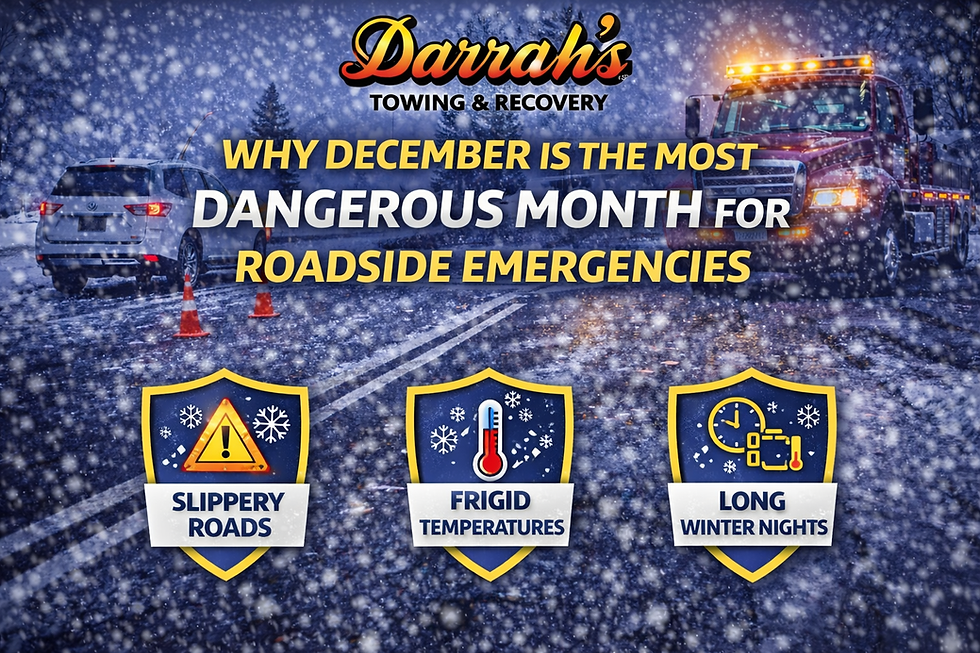
Why December Is the Most Dangerous Month for Roadside Emergencies

By Darrah’s Towing — Serving Cedar Rapids, Iowa City, Monticello & Eastern Iowa Since 1970
December in Iowa is a month of contrasts. It brings the excitement of holiday travel, family gatherings, and fresh winter scenery—but it also marks the beginning of the most dangerous season for drivers throughout Cedar Rapids, Iowa City, Monticello, and the surrounding communities. For more than fifty years, Darrah’s Towing has responded to thousands of calls each December, ranging from simple jump-starts to critical accident recoveries under hazardous winter conditions.
This firsthand experience, combined with industry data and deep knowledge of Eastern Iowa roads, has taught us one undeniable truth: December is consistently the most dangerous month for roadside emergencies. Understanding why this happens—and how to prepare for it—can save lives, prevent accidents, and keep local drivers safe throughout the winter season.
The Alarming Rise of Roadside Emergencies in December
Winter weather arrives fast in Iowa. Temperatures drop rapidly, snowfall becomes frequent, and ice forms unpredictably. This combination creates the ideal environment for vehicle breakdowns and accidents.
According to winter incident data from the Iowa Department of Transportation, roadside emergencies increase by more than 30% in December compared to November. This spike is among the highest of any month in the year.
There are several reasons this happens:
The first major storms of the season arrive
Drivers are not yet adjusted to winter conditions
Vehicles have not fully adapted to freezing weather
Holiday travel increases road traffic
Darkness lasts longer, reducing visibility
Mechanical failures occur more frequently in cold temperatures
In short: December is the month when winter hits hardest—and when most drivers are least prepared.
The Environmental Factors That Make December So Dangerous
Eastern Iowa’s unique winter climate contributes to a series of hazards that impact every driver on the road.
1. Rapid Freeze-Thaw Cycles Create Hidden Black Ice
December consistently brings temperature swings above and below freezing. Melting snow refreezes overnight, creating thin, nearly invisible sheets of ice.
Black ice is most common in:
Cedar Rapids bridges along I-380
Shaded roads in Monticello and rural Jones County
Highway 151 and Highway 13 curves
Intersections and on-ramps in Iowa City
Low-lying county roads where moisture gathers
Even cautious drivers can hit black ice without warning, leading to loss of control and sudden roadside emergencies.
2. Early Darkness Increases Accident Risk
Short daylight hours mean more time driving in the dark. In December, many Eastern Iowa drivers commute both to and from work in darkness.
Low visibility contributes to:
More deer-related collisions
More rear-end accidents
More vehicles sliding into ditches due to unseen ice
Delayed reaction times
The combination of darkness and icy roads makes even short daily trips potentially dangerous.
3. First Snowstorms Catch Drivers Off Guard
The first major snowfall of the year often arrives in December. Drivers accustomed to fall road conditions suddenly face:
Reduced traction
Slower braking
Accumulating snow on roads
Reduced visibility during active snowfall
The seasonal learning curve for winter driving is one of the major contributors to December roadside emergencies in Cedar Rapids, Iowa City, and Monticello.
4. Tire Pressure Plummets in Cold Temperatures
For every 10-degree drop in temperature, tire pressure decreases by about 1 PSI. When Iowa temperatures swing from 40 degrees to below zero within a week—as they often do in December—many drivers unknowingly operate with underinflated tires.
Underinflated tires lead to:
Poor traction
More blowouts
Increased braking distance
Higher likelihood of sliding into a ditch
Tire-related emergencies are among the top reasons our tow trucks are dispatched in early winter.
5. Batteries Fail Frequently in Cold Weather
Car batteries lose roughly 60% of their strength at 0°F, making December one of the most common months for dead batteries.
Drivers are often caught by surprise because batteries typically fail without warning in cold conditions. Holiday travel, long parking durations, and heavy use of heaters and electronics add even more strain.
The Mechanical Factors Behind December Breakdowns
Road conditions alone are not responsible for the surge in roadside emergencies. Cold weather affects virtually every component of a vehicle, placing it under greater strain than during warmer months.
1. Thickened Fluids Slow Vehicle Response
Engine oil, transmission fluid, and coolant all thicken in cold temperatures. This causes:
Difficult engine starts
Sluggish acceleration
Overheating from poor circulation
Transmission shifting problems
Vehicles that have gone too long without maintenance are especially vulnerable.
2. Frozen Fuel Lines and Tanks
Moisture in a gas tank can freeze when temperatures drop rapidly. This is a frequent issue in rural roads surrounding Monticello, Anamosa, Martelle, and Springville.
Symptoms include:
Stalling
Rough starting
Complete engine failure
Keeping the tank above half full can prevent this, but many drivers forget to do so during busy December schedules.
3. Worn Belts and Hoses Become Brittle
Rubber components harden in the cold, especially when already worn. December is when many belts snap or hoses split unexpectedly—leading to overheating, loss of power steering, or complete vehicle shutdown.
4. Windshield Washer Lines Freeze
Summer washer fluid freezes quickly, and once frozen, the entire line may crack. Without fluid, visibility becomes severely compromised during snowfall or salt spray.
This is a major problem on heavily traveled highways between Cedar Rapids and Iowa City, where slush constantly hits windshields.
5. Spark Plugs and Ignition Systems Fail
Cold weather increases electrical resistance, revealing weaknesses in ignition systems that show no symptoms during warmer months. Misfires and non-starts are extremely common in December.
The Human Factors That Lead to December Emergencies
Mechanical failures are only part of the story. Human behavior plays a major role in why December is so dangerous.
1. Drivers Haven’t Readjusted to Winter Conditions
It takes time to remember winter driving techniques. December is when:
People brake too late
Traction is overestimated
Acceleration is too aggressive
Speed limits are followed when conditions require slower driving
This adjustment period is one of the biggest contributors to early-winter accidents.
2. Holiday Travel Increases Roadway Congestion
More people on the road means more emergencies—especially on interstates and highways connecting Cedar Rapids, Iowa City, and surrounding towns.
With long-distance travel common in late December, traffic volume spikes. Heavy traffic mixed with winter weather is a dangerous combination.
3. Stress and Fatigue Impact Driver Decisions
Holiday obligations, end-of-year work deadlines, and winter illnesses all contribute to driver fatigue. Tired drivers make slower decisions, take more risks, and are more likely to slip on ice or lose control.
The Most Common December Roadside Emergencies
Based on decades of experience at Darrah’s Towing, the following emergencies dominate our December call volume:
Vehicles sliding off the road
Dead batteries
Flat or low tires
Frozen fuel lines
Brake failures
Engine overheating
Locked or frozen doors
Alternator failures
Starter problems
Broken serpentine belts
Disabled vehicles in snowdrifts
Multi-car collisions due to ice
Many of these emergencies occur suddenly with no warning, making preparation essential.
How Drivers in Eastern Iowa Can Reduce December Roadside Risks
To help protect local drivers, our towing team recommends the following:
1. Winterize Your Vehicle in November
Do not wait until the first storm. By December, it’s often too late to catch hidden mechanical issues before they fail.
2. Pay Extra Attention to Tires
Check:
Pressure weekly
Tread depth
Sidewall condition
Age (replace if older than 6 years)
Winter tires can dramatically reduce emergencies on rural Eastern Iowa roads.
3. Keep Your Fuel Tank at Least Half Full
This prevents frozen fuel lines and prepares you for unexpected delays or detours caused by winter weather.
4. Slow Down—Significantly
Posted speed limits are designed for ideal conditions. Reduce speed by at least 10–20 mph in ice or snow.
5. Pack a Winter Emergency Kit
Every vehicle should include:
Blankets
Hand warmers
Ice scraper
Phone charger
Jumper cables
Flashlight
Small shovel
Non-perishable food
Gloves and boots
These supplies can save your life if you get stranded in a remote area.
Why Eastern Iowa Trusts Darrah’s Towing During December Emergencies
Darrah’s Towing has served Cedar Rapids, Iowa City, and Monticello for decades. Our experience handling winter emergencies gives us unique insight into the dangers of December driving.
We offer:
One of Eastern Iowa’s largest towing fleets
Fast response times during storms
24/7 availability
Operators trained for winter accident recovery
Local knowledge of high-risk roads and rural areas
Support for cars, trucks, SUVs, semis, and commercial fleets
Whether it’s a simple jump-start or a complex recovery from a snow-filled ditch, our team is prepared.
Customer Testimony
“I was driving from Iowa City to Cedar Rapids late on a December evening when I hit black ice and slid into the median. I called Darrah’s Towing, and they arrived faster than I thought possible. The driver was professional, calm, and made sure I was safe the entire time. Their team got me out quickly and handled everything with care. I will always call Darrah’s before anyone else.”— Lauren, Iowa City
Conclusion: December Is Dangerous — But Preparation Saves Lives
December consistently ranks as the most dangerous month for roadside emergencies in Iowa. Between icy roads, freezing temperatures, mechanical failures, and increased holiday travel, the risks are significant and unpredictable.
But with proper preparation, smart driving habits, and a reliable towing partner, you can dramatically reduce your chances of an emergency this winter.
And when the unexpected happens, Darrah’s Towing is here for Cedar Rapids, Iowa City, Monticello, and all surrounding Eastern Iowa communities with fast, dependable service day and night.


Comments